
According to Ahrefs data, the average paid link costs around $361, and the average guest post costs roughly $77—yet an editorial link, which costs nothing to “buy,” is often the single most trusted signal in the entire link graph. That gap is exactly why so many site owners get confused about manual versus editorial link building: one is something you actively build, the other is something that happens to you when your content earns it. Both matter. But they don’t work the same way, they don’t carry the same risk, and—increasingly in 2026—they don’t carry the same weight with AI search systems either.
This guide breaks down what manual and editorial link building actually are, how Google evaluates each, the real risks involved, and the blended strategy that works best heading into the AI search era.
What Is Manual Link Building?
Manual link building is any link acquisition process that’s actively initiated by a person—outreach, negotiation, or direct placement—rather than links that appear organically because someone simply chose to reference your content.
Common Manual Link Building Methods
- Guest posting — writing content for another site in exchange for a link
- Niche edits — inserting a link into an already-published, relevant article
- Broken link building — finding dead links on relevant pages and offering your content as the replacement
- Resource page outreach — pitching your content for inclusion on curated resource/link pages
Example: What a Manual Link Actually Looks Like?
Imagine an SEO agency reaches out to a mid-sized marketing blog, offers a well-written guest post about email automation, and includes a single contextual link back to their client’s tool in the body copy. The blog publishes it, the link goes live, and the agency reports it to the client as a “DR 45 placement.” That’s manual link building in its purest form—a deliberate, negotiated exchange between two parties, with a specific outcome in mind.
What Is Editorial Link Building?
Editorial link building refers to links earned naturally, with no outreach, payment, or negotiation involved. Someone links to your content because it’s genuinely useful to their reader—not because you asked them to.
How Editorial Links Actually Happen?
- A journalist cites your original data or study while writing a news piece
- A blogger links to your resource organically because it answers a question their readers have
- A researcher or writer references your content as a source in their own work
Why Editorial Links Are Harder to Fake?
Editorial links don’t follow a transactional pattern — there’s no negotiated anchor text, no payment trail, and no predictable timing. This is precisely what makes them so hard to fake and so valuable in Google’s eyes. And this is where the 2026 shift matters: algorithms (and increasingly, AI models evaluating content for citation) are specifically trained to detect patterns that look transactional. A link with no negotiation history, no matching anchor-text pattern across dozens of domains, and no payment footprint simply doesn’t look “buildable”—which is exactly why it earns more trust.
Manual vs Editorial Link Building — Key Differences
| Factor | Manual Link Building | Editorial Link Building |
| Control | High | Low |
| Scalability | Easier | Harder |
| Cost | Medium–High per link | Free (but time-intensive) |
| Trust Level | Medium–High (if done ethically) | Very High |
| Penalty Risk | Depends on execution | Very Low |
| Time to Results | Faster | Slower |
| AI/LLM Citation Value | Moderate | High |
The Real Difference Isn’t the Method — It’s the Intent
It’s tempting to think of manual and editorial links as two separate categories with a hard line between them, but the real distinguishing factor is intent, not mechanism. A guest post can be genuinely editorial in spirit if it’s written because you have real expertise to share and the link is incidental to the value provided. Conversely, a link that appears “natural” on the surface can still be manipulative if it was engineered specifically to pass authority rather than to help a reader. Google’s systems — and increasingly, AI models trained to judge content trustworthiness — are built to evaluate that underlying intent, not just the surface-level method used to get the link placed.
Benefits of Manual Link Building
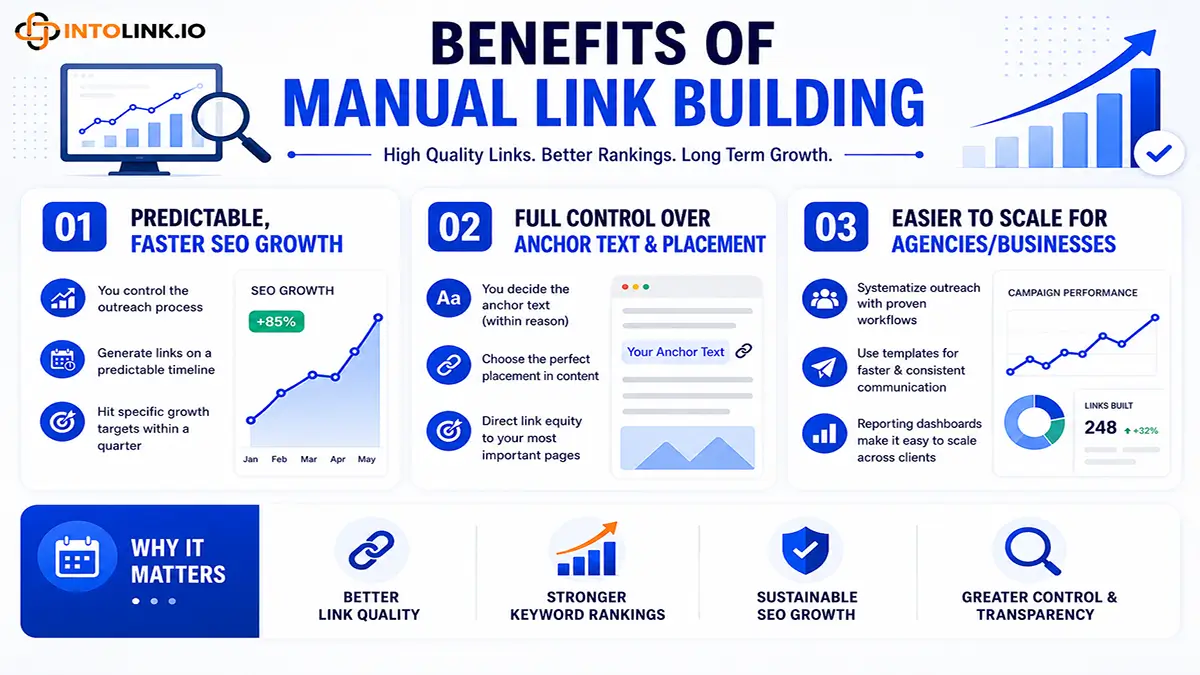
Predictable, Faster SEO Growth
Because you control the outreach process, you can generate links on a predictable timeline — useful when you need to hit specific growth targets within a quarter.
Full Control Over Anchor Text & Placement
You decide (within reason) what anchor text is used and where in the content the link sits, giving you more precision over how link equity flows to specific pages.
Easier to Scale for Agencies/Businesses
Manual processes can be systematized—outreach templates, prospecting workflows, and reporting dashboards make it realistic to run at scale across multiple clients or campaigns.
Benefits of Editorial Link Building
Maximum Trust Signal From Google
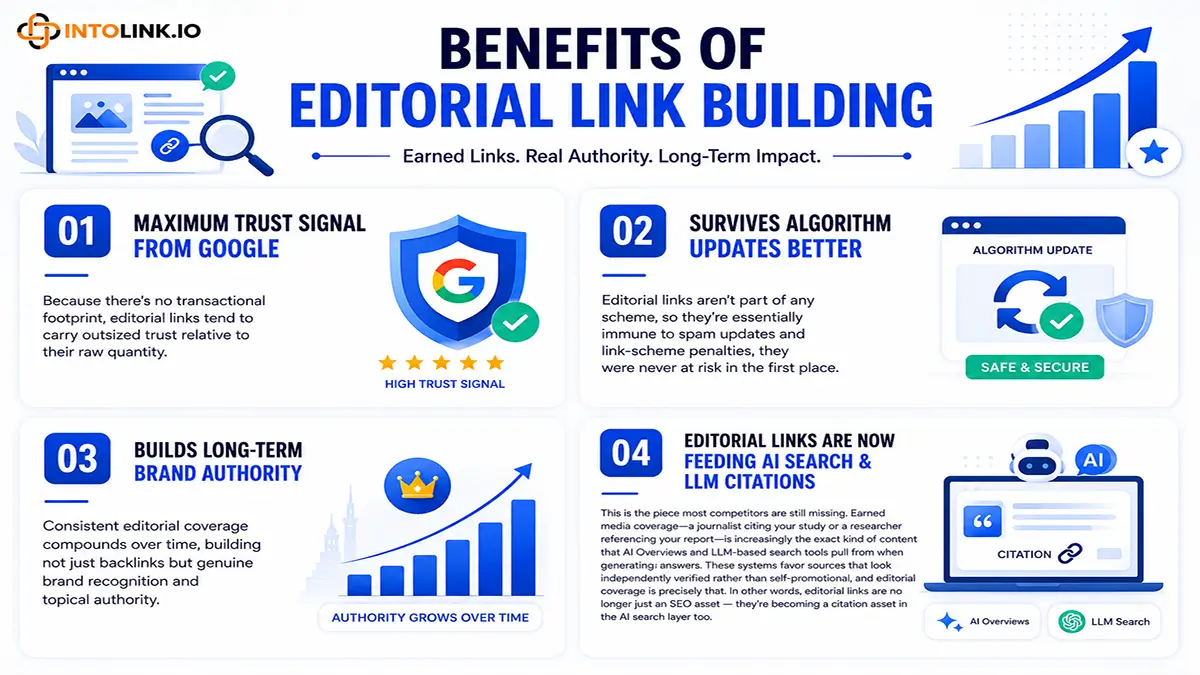
Because there’s no transactional footprint, editorial links tend to carry outsized trust relative to their raw quantity.
Survives Algorithm Updates Better
Editorial links aren’t part of any scheme, so they’re essentially immune to spam updates and link-scheme penalties, they were never at risk in the first place.
Builds Long-Term Brand Authority
Consistent editorial coverage compounds over time, building not just backlinks but genuine brand recognition and topical authority.
Editorial Links Are Now Feeding AI Search & LLM Citations
This is the piece most competitors are still missing. Earned media coverage—a journalist citing your study or a researcher referencing your report—is increasingly the exact kind of content that AI Overviews and LLM-based search tools pull from when generating answers. These systems favor sources that look independently verified rather than self-promotional, and editorial coverage is precisely that. In other words, editorial links are no longer just an SEO asset — they’re becoming a citation asset in the AI search layer too.
Risks & Downsides You Should Know
When Manual Link Building Crosses Into a “Link Scheme”
Google’s guidelines on link schemes are specific: any link exchanged for money, product, or service without proper disclosure (like rel=”sponsored”) can be considered manipulative, regardless of how “natural” the surrounding content looks. Manual link building itself isn’t against the rules; what crosses the line is when the primary purpose of a link is to manipulate rankings rather than to help a user, especially when done at scale through PBNs, link farms, or bulk paid placements without disclosure.
Why Are Editorial Links Slow (and How to Deal With It)?
The obvious downside of editorial links is that you can’t force them on a timeline. The way to manage this isn’t to abandon editorial strategy, it’s to consistently produce genuinely citation-worthy assets (original data, unique studies, expert commentary) and pair that long-term investment with manual outreach in the meantime so you’re not relying on either channel alone.
What Does Google Actually Trust More?
It’s Not the Method — It’s Authenticity & Context
Google doesn’t have a rule that says “editorial links always outrank manual links.” What it evaluates is whether a link serves genuine user value and fits naturally within its context. A well-executed, disclosed, relevant manual link can absolutely be trusted. A spammy, irrelevant “editorial-looking” link can still get flagged.
How Google’s Algorithms Evaluate Link Intent?
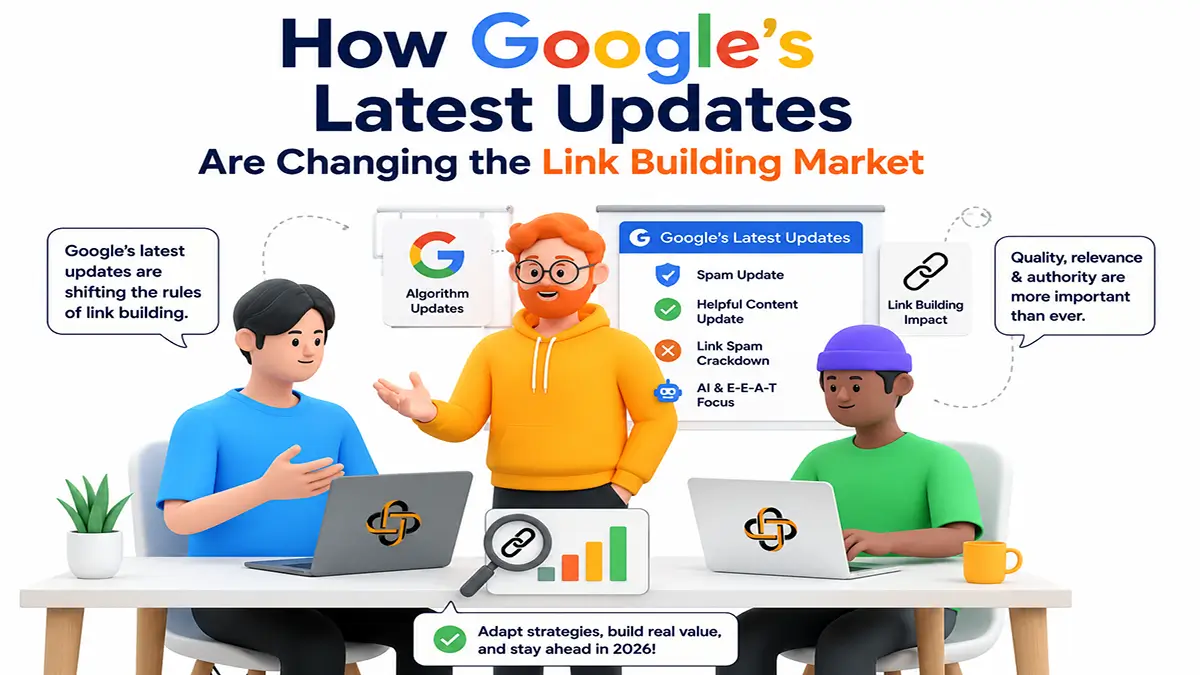
Since the March 2024 core and spam update, Google has placed heavier emphasis on detecting scaled, low-value link patterns — regardless of whether they’re framed as guest posts, niche edits, or “natural” placements. SpamBrain, Google’s AI-based spam detection system, looks at signals like anchor text distribution, link velocity, and topical relevance to infer whether a link pattern looks manufactured. The practical implication: it’s not about avoiding manual link building altogether, it’s about avoiding patterns that look scaled, templated, or disconnected from genuine relevance.
The Best Strategy: Blend Manual Outreach With Editorial Intent
Step 1. Create Link-Worthy Content First
Before any outreach happens, you need something worth linking to — original data, a unique framework, first-hand case studies, or genuinely useful tools. Without this, neither manual nor editorial efforts will scale sustainably.
Step 2. Do Manual Outreach the Right Way
Personalize your pitches, target genuinely relevant publications, and lead with value rather than a link request. Manual outreach done well doesn’t look or feel manipulative — it looks like a relevant introduction between two parties with aligned audiences.
Step 3. Let Some Links Come In Editorially Over Time
Once you have content that’s genuinely reference-worthy, you’ll start earning links you never asked for—especially if you actively pitch data and studies to journalists (a hybrid tactic sometimes called “digital PR”).
A Simple Checklist: Is Your Link “Editorial Style”?
- No payment, product, or service was exchanged for the link
- The anchor text was chosen by the linking site, not negotiated by you
- The link appears within genuinely relevant, non-promotional content
- There was no direct outreach asking specifically for that link
- The link would still exist even if you never knew about it
If a link checks most of these boxes, it’s functioning as editorial in Google’s eyes, regardless of how it originated.
Manual vs Editorial Link Building — Which Should You Choose?
- Early-stage business with limited authority: Lean manual — you need momentum, and editorial links won’t come until you have a reputation.
- Established brand with resources for content/PR: Invest more heavily in editorial — digital PR and original research will compound faster than continued manual outreach.
- Tight timeline / campaign-driven goals: Manual link building, executed ethically, is the more realistic path to predictable results.
- Long-term brand and AI-visibility goals: Prioritize editorial-style link earning—it’s the channel most aligned with how AI search increasingly evaluates trust.
In practice, most sustainable link profiles use both—manual outreach to build momentum early and a growing share of editorial coverage as authority and content quality increase.
Frequently Asked Questions
Is manual link building against Google’s guidelines?
Not inherently. Manual link building only violates guidelines when links are exchanged primarily to manipulate rankings, especially without proper disclosure or at a manipulative scale.
Can you buy editorial links?
No — by definition, an editorial link is earned, not purchased. If money changes hands for a link, it’s a manual (or paid) link, even if it’s placed within otherwise organic-looking content.
How long does it take to earn editorial links?
It varies widely, but most brands start seeing consistent editorial coverage after several months of publishing genuinely citation-worthy content and actively pitching it to journalists or industry publications.
What’s a safe manual-to-editorial link ratio?
There’s no official Google-published ratio, but a healthy, natural-looking profile typically includes a mix of both—an overwhelming reliance on manual links alone tends to look more scaled and pattern-based.
Does guest posting count as editorial or manual?
Guest posting is generally classified as manual since it involves direct outreach and negotiated placement—even when the content itself is high-quality and genuinely valuable.
Final Thoughts
Manual and editorial link building aren’t competing strategies, they’re complementary parts of a sustainable SEO approach. Manual outreach gives you control and speed; editorial links give you trust and durability, including growing relevance in how AI search tools cite sources. The businesses winning in 2026 aren’t choosing one over the other—they’re building genuinely link-worthy content, doing outreach the right way, and letting editorial coverage compound on top of it.
If you’re not sure where your current link profile stands on the manual-vs-editorial spectrum, an audit is a good place to start.
Book a free link profile audit/consultation call 👉 Book Now