
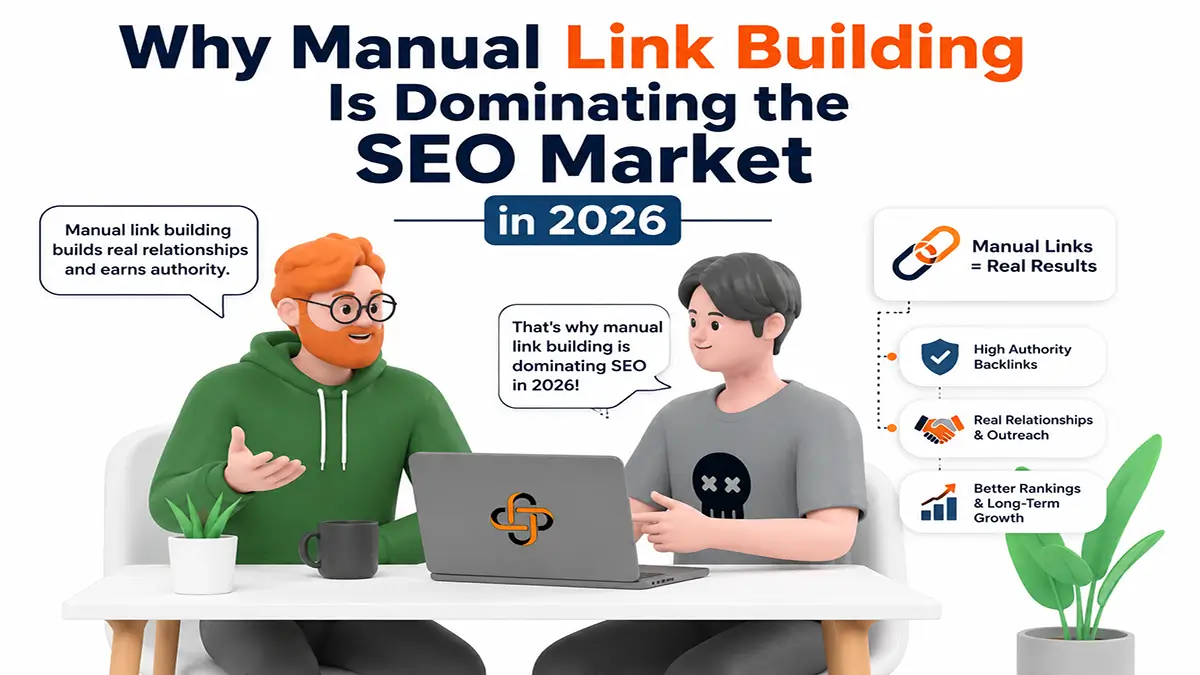
Manual link building—personalized outreach, editorial vetting, and human-placed links is outperforming automated and mass-scaled tactics in 2026 because Google’s spam systems and AI search models are both now built specifically to detect scaled, pattern-based link behavior. The December 2025 core update reshuffled rankings on an estimated 40–60% of websites globally, and the sites hit hardest were disproportionately the ones leaning on AI-generated content and automated link placements.
This guide walks through why that shift happened, what manual link building actually looks like as a process, the real cost of doing it properly, and how it connects to the newest frontier — AI Overviews and generative search citations.
The Journey — From Link Quantity to Link Quality
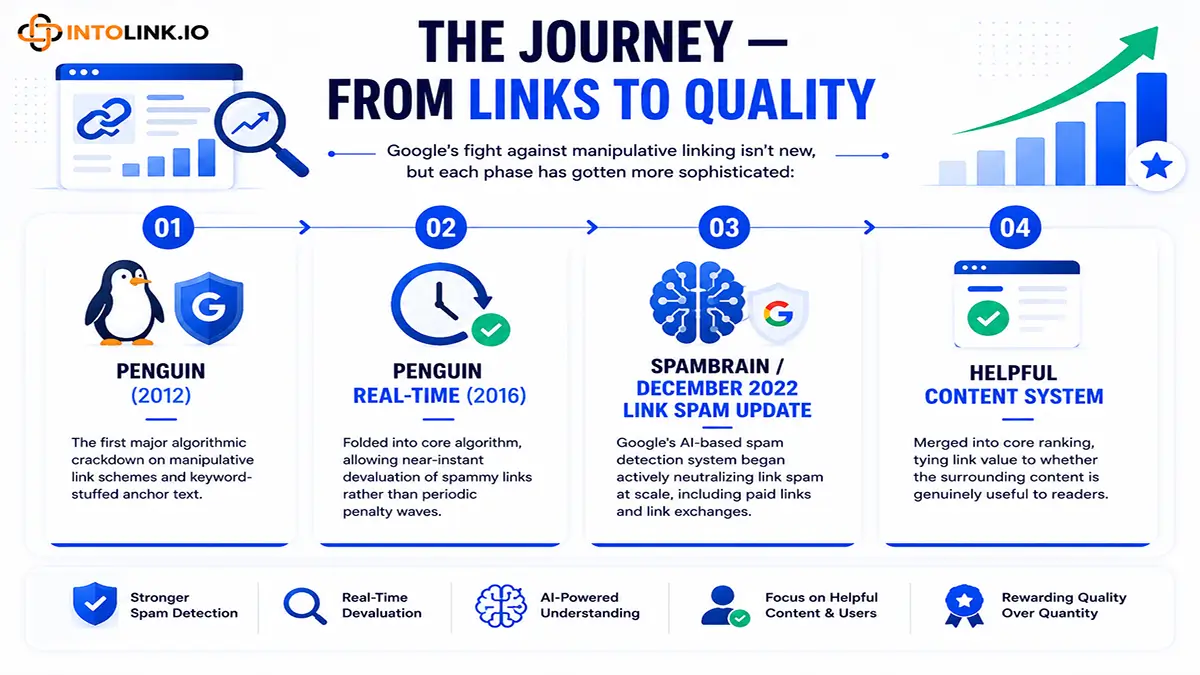
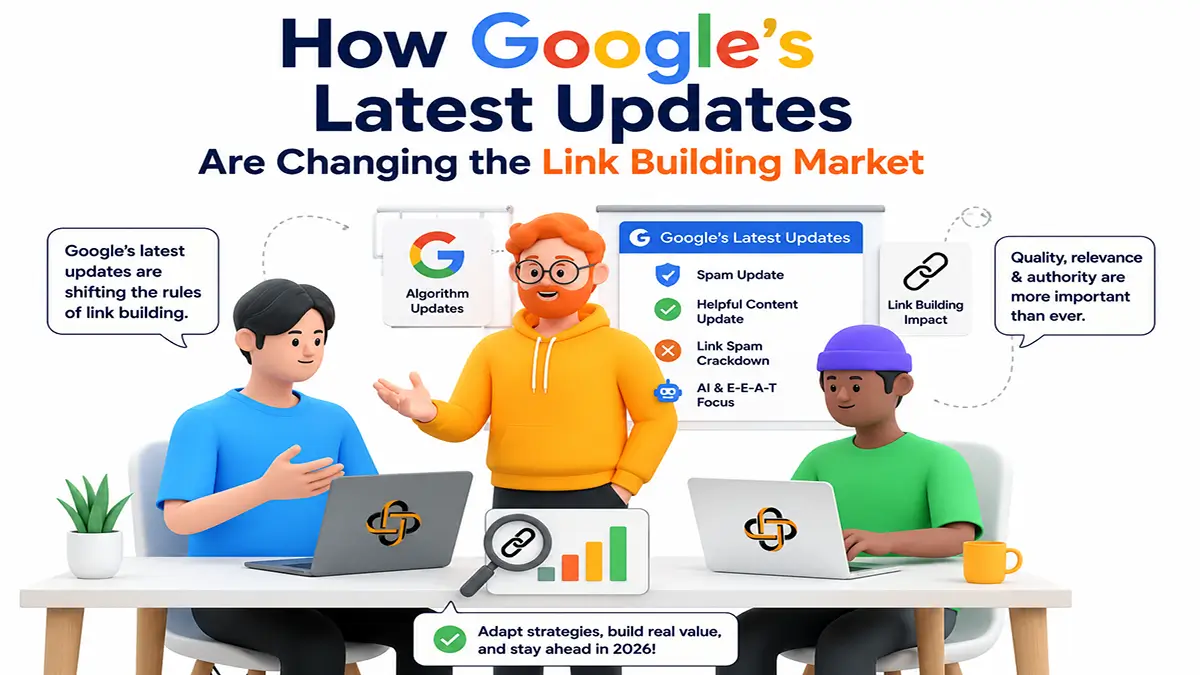
Google’s fight against manipulative linking isn’t new, but each phase has gotten more sophisticated:
- Penguin (2012): The first major algorithmic crackdown on manipulative link schemes and keyword-stuffed anchor text
- Penguin Real-Time (2016): Folded into core algorithm, allowing near-instant devaluation of spammy links rather than periodic penalty waves
- SpamBrain / December 2022 Link Spam Update: Google’s AI-based spam detection system began actively neutralizing link spam at scale, including paid links and link exchanges
- Helpful Content System: Merged into core ranking, tying link value to whether the surrounding content is genuinely useful to readers
What Changed in Google’s Detection in 2025–2026?
The newest evolution is that SpamBrain now operates at the pattern level, cross-referencing anchor text distribution, link velocity, and domain-level patterns simultaneously—rather than evaluating any single signal in isolation. A site can no longer “pass” by fixing one variable (like anchor diversity) while ignoring the others; the system looks at the full fingerprint of how links were acquired.
What Is Manual Link Building? (Definition + How It Actually Works)
Manual link building is the process of earning backlinks through direct, human-led effort — research, personalized outreach, and editorial negotiation — rather than through automated tools, link networks, or bulk purchasing.
The Real Process Behind a Manual Link (Step by Step)
- Prospecting: Identifying genuinely relevant, topically aligned sites with real traffic and editorial standards
- Personalized outreach: Reaching out with a pitch tailored to that specific site and its audience, not a templated mass email
- Content creation/pitch: Either proposing a guest contribution or offering existing content as a resource
- Editorial review: The target site’s editor evaluates the pitch on its actual merit
- Placement: The link goes live, typically within genuinely relevant context
This is a labor-intensive process by design, and that labor is exactly what makes the resulting links harder to replicate at scale, which is a large part of why they hold up better against algorithm updates.
Why 2026 Is Different—The “Outreach Fatigue” Problem?
Editors Are Drowning in AI-Generated Pitches
Publishers report that a typical SaaS-focused editor now receives 400+ outreach pitches per week, with an estimated 80% recognizable as AI-generated based on generic phrasing, repeated structures, and a lack of specific familiarity with the publication. This has fundamentally changed how editors filter incoming pitches—generic outreach isn’t just less effective, it’s often auto-filtered or ignored outright before a human even reads it.
Why Generic Outreach Now Damages Your Brand, Not Just Fails?
Beyond wasted effort, poor outreach practices now carry a deliverability cost. Gmail’s bulk sender policies, tightened in 2024–2025, actively penalize domains sending high volumes of low-engagement email, meaning mass outreach campaigns can damage your domain’s sender reputation and hurt legitimate email deliverability across your entire organization, not just your link-building campaign. This is one of the clearest arguments for why personalized, manual outreach isn’t just a “nicer” approach—it’s now the operationally safer one.
Manual vs Automated Link Building — Side-by-Side Comparison
| Factor | Manual Link Building | Automated Link Building |
| Editorial control | High | Low/None |
| Google penalty risk | Low | High |
| Anchor text pattern | Natural, varied | Repetitive |
| Placement relevance | Topically matched | Often irrelevant |
| Longevity | Long-term, algorithm-resistant | Temporary, prone to devaluation |
| Cost | Higher upfront | Lower upfront, hidden long-term cost |
The Real Cost of Manual Link Building in 2026 (Numbers Included)
Typical Price Range Per Link
Quality manual links typically cost $200–$700 per link, depending on the domain’s authority, niche difficulty, and the amount of custom content required.
What You’re Actually Paying For
- Custom, non-templated content written specifically for the target site
- The editor’s time reviewing and approving the placement
- Domain vetting — confirming the site has real traffic and editorial standards, not just a high DR number
- Traffic verification to ensure the link sits on a page that actually gets visited, not a dead archive page
Red Flags to Avoid When Buying Manual Link Services
- Any provider promising “guaranteed links” on specific domains
- No sample prospect list shown before you commit
- No traffic data provided for the linking pages
- Templated or clearly AI-generated content used across multiple placements
Manual Link Building and Google’s E-E-A-T Framework
Manual link building, done properly, directly reinforces E-E-A-T. Consider a case where a niche cybersecurity blog earns a citation from an expert-led industry publication after contributing original research—that research—that single mention does more for the site’s topical authority than dozens of generic directory links because it signals recognition from a source Google (and readers) already consider credible in that space.
The New Frontier — Manual Links, AI Overviews & GEO (Generative Engine Optimization)
How AI Search Engines Choose What to Cite
Generative search systems favor co-citation (being mentioned alongside other credible sources), consistent brand mentions across multiple domains, and entity-based authority—signals that closely track how genuinely earned, manually placed links tend to accumulate over time.
Why Automated Links Don’t Help With AI Citations
AI models are trained to recognize the same scaled, templated patterns that trigger Google’s spam systems. A link farm doesn’t just fail to help with AI citations — it actively signals a lack of independent credibility, since genuine citation patterns rarely look uniform or mass-produced.
Real Example of Co-Citation Value
If a brand is mentioned alongside established industry names — for example, cited in the same roundup article as well-known competitors, or referenced in a comparison piece written by an independent analyst — that co-citation carries far more weight than a standalone backlink, because it signals the brand belongs in that conversation, not just that a link exists.
Contextual Relevance—Why One Right Link Beats 50 Random Links?
A single link from a genuinely relevant niche publication is worth more than fifty links from unrelated directory sites. Think of it like a professional reference: one recommendation from a respected expert in your field carries more weight than fifty form-letter endorsements from people who don’t actually know your work.
Signals That Prove Manual Link Building Works (Traffic + Behavior Data)
Beyond the link itself, manual placements tend to generate real user behavior signals — longer dwell time, genuine engagement, and multi-page visits from readers who found the link within relevant, well-written content. These behavioral signals reinforce the link’s value in ways that a purchased or automated placement, sitting on an irrelevant or low-quality page, simply can’t replicate.
Is Manual Link Building Future-Proof?
As long as Google (and now AI search systems) continue optimizing to detect scaled manipulation, manual link building’s core advantage—being genuinely difficult to replicate at scale—remains structurally resistant to algorithm shifts. It’s not immune to scrutiny, but it isn’t built on the kind of pattern that gets systematically targeted either.
How to Choose a Manual Link Building Partner/Service in 2026?
Questions to Ask Before Hiring
- Do they show real prospect lists before starting work?
- Will they share their outreach templates and process transparently?
- What’s their pricing model — per link, retainer, or performance-based?
Checklist for Vetting Any Agency
- Provides traffic and relevance data for prospective linking sites
- Shows examples of previously placed, non-templated content
- Explains their outreach process in specific, non-vague terms
- Has no history of guaranteeing exact placements or rankings
- Is transparent about timelines — manual link building takes time
Frequently asked questions
Is manual link building better than guest posting?
Guest posting is actually one method within manual link building — the distinction that matters is whether the outreach and content are genuinely personalized and relevant, regardless of format.
How much does manual link building cost in 2026?
Most quality manual links run $200–$700 per link, depending on domain authority, niche difficulty, and the amount of custom content involved.
Can manual link building get penalized?
Yes, if it’s done at scale with obviously manipulative patterns (templated content, repetitive anchors, undisclosed paid placements). Done ethically and selectively, the penalty risk is low.
How long does it take to see results from manual links?
Most sites see measurable impact within 3–6 months, though timelines vary based on niche competitiveness and the authority of the linking domains.
Final Thoughts
Manual link building isn’t dominating the SEO market because it’s trendy — it’s dominating because it’s structurally aligned with how both Google’s spam systems and AI search models are built to evaluate trust. Editors are more skeptical of generic pitches than ever, automated links carry rising penalty risk, and AI overviews increasingly favor genuinely earned citations over engineered ones. The sites investing in real, personalized outreach today are the ones best positioned to hold their rankings — and their AI visibility — through whatever comes next.
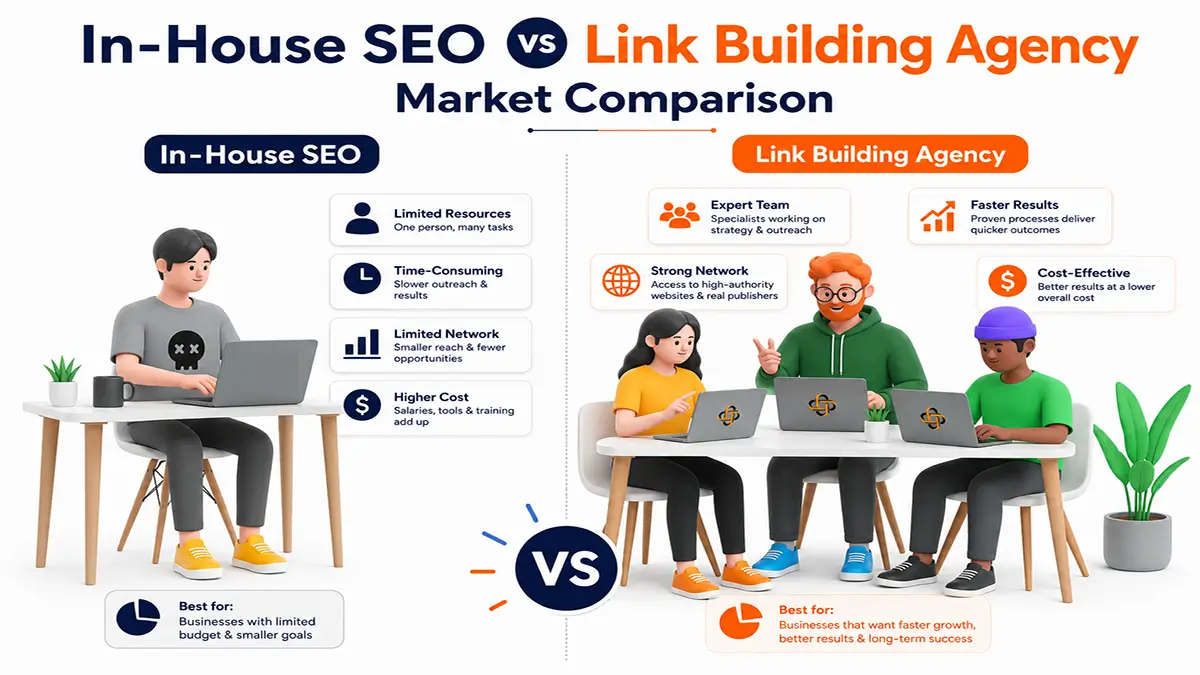
If you’re weighing whether to build this in-house or bring in outside help, an audit of your current link profile is a useful starting point.