
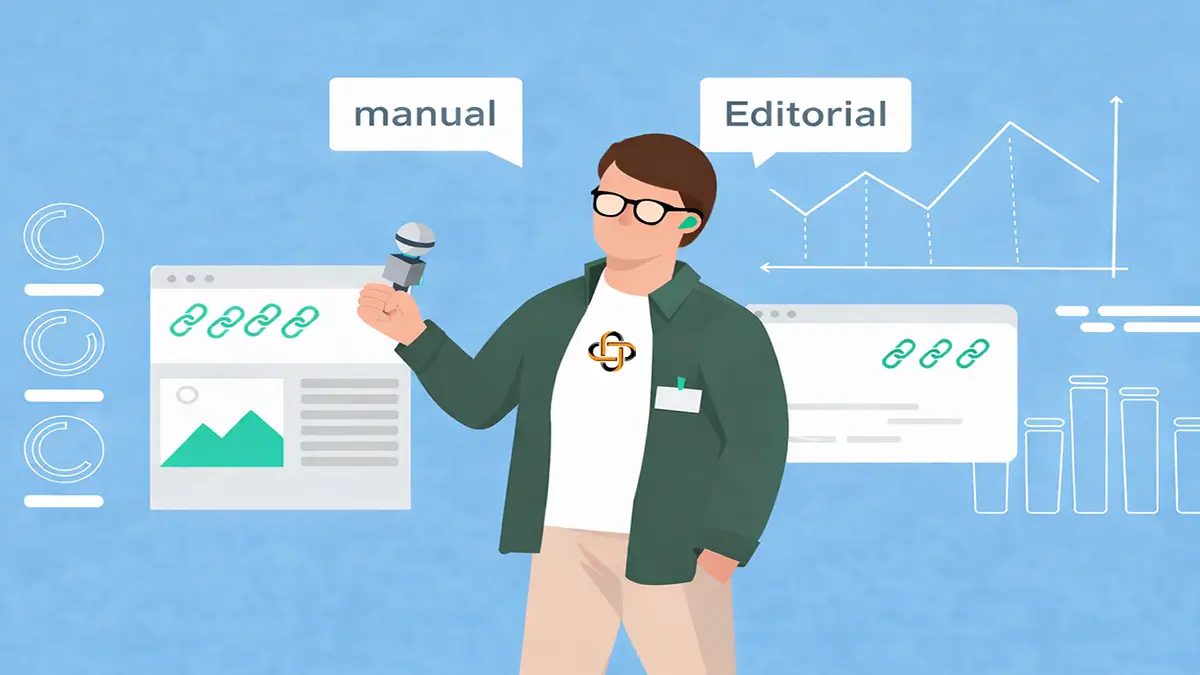
Google has started ignoring low-quality backlinks entirely, including those from “SEO-looking” sites. This is where confusion has been created around manual link building and editorial link building, leading to many firms not knowing what approach actually works.
This is where this blog comes in to help you with the key differences, real benefits, and the ideal link-building strategy Google trusts.
What Is Manual Link Building?
Manual link building means acquiring backlinks through human-led outreach, not automation.
This often includes:
- Guest posts placed through personalized outreach
- Niche edits added to relevant content
- Direct communication with real website owners
When done properly, manual link building allows SEO teams to maintain quality control. However, as Intolink emphasizes, manual does not mean manipulative. Google values manual links only when they are contextual, relevant, and placed with editorial intent.
What Is Editorial Link Building?
Editorial link building refers to links that are earned naturally because content is genuinely useful. These links are:
- Added by editors voluntarily
- Based on content value
- Not forced or over-optimized
Google strongly favors editorial links because they reflect real-world trust. This is why SEO teams at Intolink design link strategies that aim to earn editorial-style placements, even when links are acquired through outreach.
Manual vs Editorial Link Building—Key Differences
| Factor | Manual Link Building | Editorial Link Building |
| Control | Higher control | Low control |
| Scalability | Easier to scale | Harder to scale |
| Trust Level | Medium–High (if ethical) | Very high |
| Risk | Depends on execution | Very low |
| Time & Effort | Faster results | Takes longer |
Checking to Intolink, the biggest difference is not the method but the intent behind the link.
Benefits of Manual Link Building
When executed responsibly, manual link building offers real profit.
Key benefits include:
- More predictable SEO growth
- Control over anchor text and target URLs
- Faster visibility improvements
For this reason, Intolink often uses manual outreach as a starting point—while ensuring every link looks natural and editorial.
Benefits of Editorial Link Building
Editorial link building delivers long-term authority.
Main benefits:
- Higher trust signals
- Stronger brand recognition
- More stable rankings during updates
These links are difficult to earn, but they form the backbone of sustainable SEO. Intolink considers editorial links essential for long-term growth.
Which Link Building Strategy Does Google Trust Most?
Here’s the reality:
Google doesn’t trust a method—it trusts authenticity.
- Manipulative manual links
- Editorial-style, value-driven links
Whether a link is manual or earned, Google evaluates context, relevance, and intent. This is why Intolink avoids shortcuts and focuses on trust-first execution.
Best Strategy: Manual Outreach for Editorial Links
The most effective approach today blends both strategies.
The integration of both tactics is proving to be the most successful strategy of the present time.
This indicates:
- Tailored manual work
- Interaction by a person, not by a machine
- Contextualized links integrated into a piece of content
- Strategically placed content that is relevant to the topic and is supported by experience
At Intolink, this blended approach guarantees that links appear to be earned rather than contrived, just as Google appreciates.
Final Thoughts
Nowadays the SEO situation is different, if you use a single link-building strategy it is no longer effective. Outreach based linkages can be effective, but they can pose risks if relevance and intent are not carefully handled. Editorial links, on the other hand, build strong trust but take time to earn. For this cause, maintaining long-term SEO necessitates a fine balance. Google continuously supports websites that prioritize true relevance and a genuine desire to grow. As proved by Intolink, the most effective link development today is achieved by targeted manual work supported by true community trust.